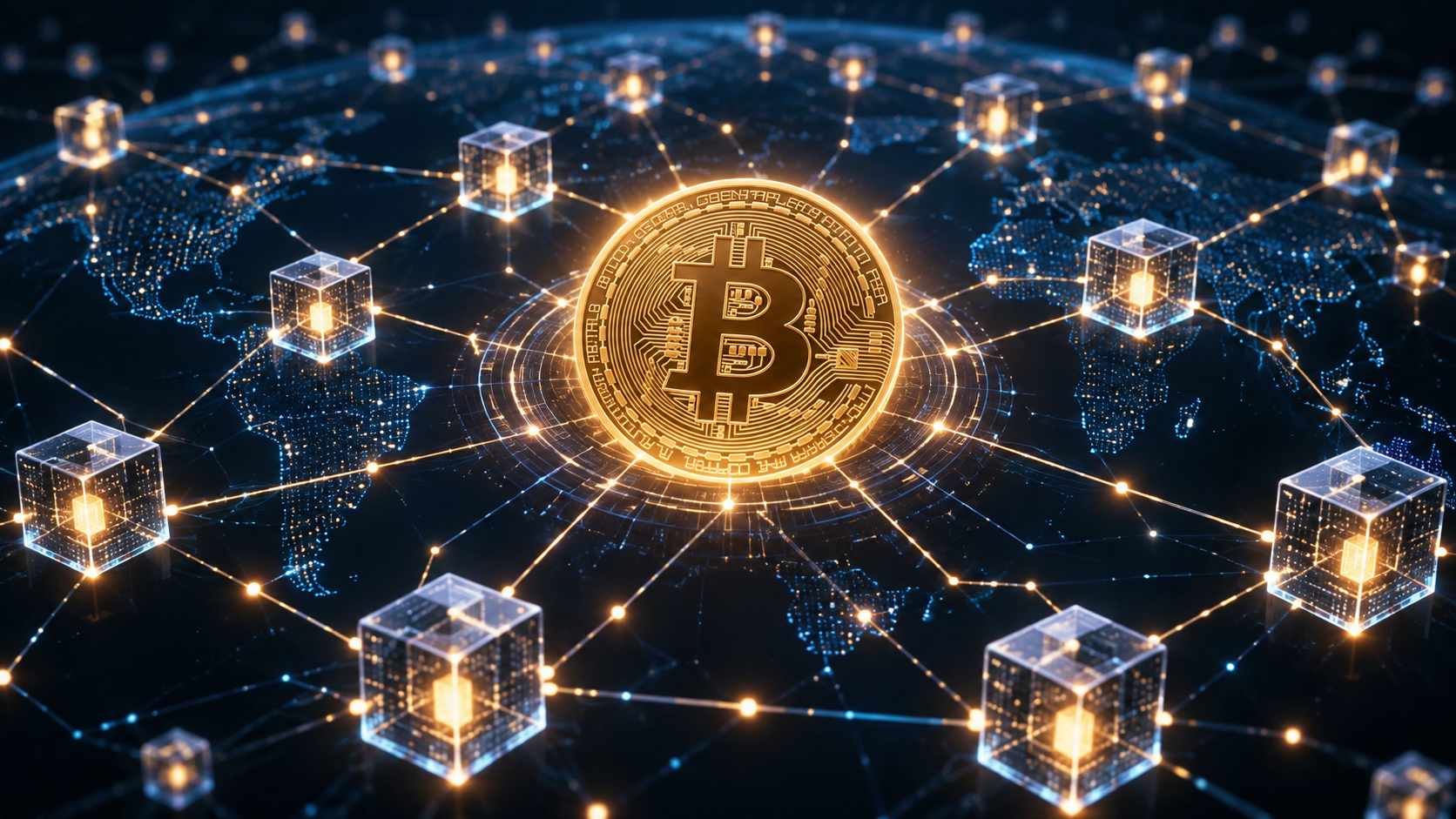
Bitcoin is a digital asset and payment network that lets people transfer value directly over a peer-to-peer system. Since its introduction in 2009, it has become a widely known use of blockchain technology. A public ledger records confirmed transactions, while shared rules let network participants verify them without a central authority.
This guide explains how the network works, what mining and wallets do, and which benefits and risks matter before you use or hold this asset.
What is Bitcoin?
Bitcoin is a digital asset that people can send directly across a peer-to-peer network. No central bank operates the network. Instead, participants follow shared rules to verify transactions and maintain its public record. A person or group using the name Satoshi Nakamoto introduced the system in 2009.
The blockchain records confirmed transactions in chronological order. Wallets use cryptographic keys to authorize payments, while miners compete to add new blocks through a process called proof of work. In addition, the protocol sets the rules for issuing new coins.
How Does Bitcoin Work?
The network consists of computers that follow the same transaction and consensus rules. When someone sends funds, participating computers share and check the transaction. Miners then collect valid transactions into candidate blocks and compete to add a block to the chain.
Each confirmed block builds on the previous one, creating a chronological public record. Proof of work makes rewriting that record increasingly difficult as more blocks accumulate. Anyone can inspect the chain. However, a confirmation does not reveal the real-world identity behind every address.
Key Components of Bitcoin
- Blockchain: A public, chronological record allows participants to inspect confirmed transactions.
- Mining: Miners use computing power to compete for the right to add a new block. The successful miner can receive newly issued coins and transaction fees under the protocol’s rules.
- Wallets and Private Keys: A wallet helps users manage the keys needed to authorize payments. The coins remain recorded on the blockchain rather than being stored inside the wallet.
Benefits and Risks of Bitcoin
Users can transfer value across borders without asking a traditional financial intermediary to process each payment. The protocol defines the supply rules, and anyone can independently check confirmed transactions on the public blockchain. However, network access, transaction fees, and local services still affect how practical a payment may be.
The risks are substantial. For example, market prices can change sharply, and a confirmed transaction is generally difficult to reverse. In addition, losing the keys to a self-custody wallet may mean losing access to the funds. Before using the network, consider scams, cybersecurity threats, transaction fees, and the rules that apply where you live.
How to Get Started with Bitcoin
- Choose a Bitcoin Wallet: Select a wallet that fits your needs. Check who controls the private keys, protect your recovery information, and never share it.
- Obtain Bitcoin: Bitcoin can be obtained through cryptocurrency exchanges, peer-to-peer transactions, or other supported services. Availability and requirements vary by provider and jurisdiction.
- Protect Your Bitcoin: Use strong account security, enable multi-factor authentication where available, verify addresses before sending transactions, and keep private keys or recovery phrases secure.
Related Guides
Official Resources
- Bitcoin.org: How Does Bitcoin Work?
- Bitcoin.org – Bitcoin: A Peer-to-Peer Electronic Cash System
- Bitcoin.org – Securing Your Wallet
FAQs
What is Bitcoin mining?
Mining is the process of competing to add a valid block of transactions to the blockchain. Miners expend computing power in the proof-of-work system. The successful miner may receive newly issued coins and transaction fees under the protocol’s rules.
Is Bitcoin legal?
Laws vary by country and may apply differently to buying, holding, trading, transferring, and paying with this asset. Check the current rules, tax obligations, and service requirements in your jurisdiction.
How can I buy Bitcoin?
For example, you can use a cryptocurrency exchange or another supported service, depending on where you live. Before choosing a provider, review its fees, security practices, custody arrangements, identity-verification requirements, and applicable local rules.
Final Thoughts
Bitcoin introduced a decentralized way to transfer and record digital value using blockchain technology. Its network combines cryptography, proof of work, and a distributed system of participants to operate without a central authority controlling transactions.
However, understanding how the network works matters before using or holding this asset. Users should consider price volatility, wallet and private key security, transaction risks, fees, and the regulatory requirements that apply in their jurisdiction.

 Bitcoin
  Ethereum
  Tether
  BNB
BNB  XRP
XRP  USDC
USDC  Solana
  TRON
TRON  Figure Heloc
  Zcash
Zcash