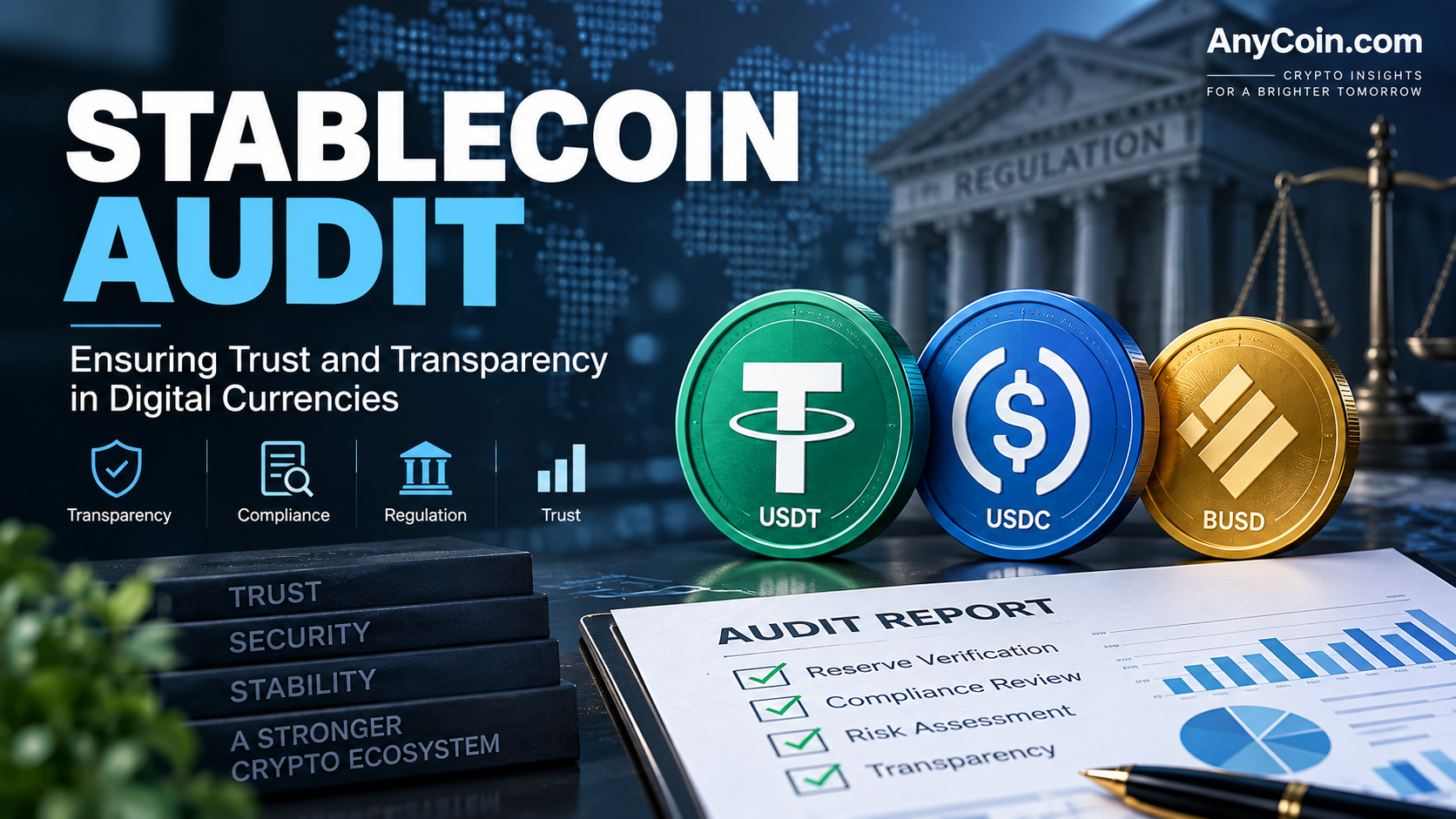
Stablecoins have emerged as a cornerstone of the cryptocurrency ecosystem, offering price stability and acting as a bridge between the digital asset world and traditional finance. However, recent controversies and collapses have emphasized the need for stablecoin audit practices to ensure Transparency and user trust.
What is a Stablecoin Audit?
A stablecoin issuer may publish different kinds of independent reports. A financial statement audit examines the issuer’s financial statements under an applicable auditing framework. A reserve attestation or examination addresses specific claims about reserve assets at a stated time or over a stated period. These reports differ in scope, so readers should check what was reviewed, who performed the work, and the date of the report before treating it as evidence of a stablecoin’s backing.
Key Objectives of a Stablecoin Audit
- Reserve Verification: Check whether the reported reserve assets and outstanding tokens match the report’s stated criteria and measurement date.
- Transparency: Providing detailed insights into the types of assets held in reserve.
- Regulatory Compliance: Ensuring the issuer complies with jurisdictional laws and financial regulations.
- Risk Assessment: Identifying potential vulnerabilities, such as centralization risks or opaque reserve management.
Why Stablecoin Audits Matter
The collapse of TerraUSD (UST) showed that stablecoins can fail for reasons beyond whether an issuer publishes a reserve report. UST relied on an algorithmic mechanism rather than a conventional reserve of cash and short-term assets. Its failure highlighted the need to examine each stablecoin’s backing, redemption mechanism, and risks according to its actual design.
Case Study: Tether (USDT) vs. USD Coin (USDC)
Tether (USDT) and USD Coin (USDC) have both strengthened their reserve transparency practices. Tether publishes periodic reserve attestations and, in 2026, completed its first full independent financial statement audit for the 2025 fiscal year. Circle publishes regular USDC reserve disclosures and monthly third-party assurance reports. These developments illustrate how reserve verification, independent assurance, and clear disclosure have become increasingly important for major stablecoin issuers.
Regulatory Push for Auditing
Governments and regulators are placing greater emphasis on stablecoin reserve transparency and independent verification:
• United States: The GENIUS Act was enacted in July 2025 and sets out a federal framework for payment stablecoins, including reserve reporting and independent examination requirements. Implementation rules were still being developed in 2026, so readers should check the current regulatory status.
• European Union: MiCA sets EU rules for asset-referenced tokens and e-money tokens, the categories that cover many stablecoins. Issuers face requirements that depend on the token type, including rules for reserves, governance, and disclosure.
These regulatory developments reflect a broader shift toward stronger reserve verification, transparency, and accountability in the stablecoin market.
Implementing Effective Audit Protocols
Stablecoin issuers aiming for legitimacy and longevity must adopt rigorous audit standards:
- Engage reputable accounting firms for third-party audits.
- Provide real-time or frequent attestations to reassure users.
- Disclose reserve compositions to allow public scrutiny.
- Integrate blockchain-based audit trails for immutable record-keeping.
Benefits of Transparent Auditing
- User Confidence: Transparent audits increase user trust and adoption.
- Informed Risk Assessment: Clear, independently reviewed information can help users assess a stablecoin’s reserves and identify risks, but it cannot guarantee price stability.
- Institutional Participation: Financial institutions prefer compliant, audited, and stable cryptocurrencies for integration.
Related Guides
Official Resources
FAQs
What is the difference between an audit and an attestation?
A financial statement audit examines an issuer’s financial statements under an applicable auditing framework. A reserve attestation or examination provides assurance about specific reserve information under its own stated scope and criteria. Neither label alone tells readers everything that was checked; review the independent report for its measurement date, procedures, and conclusion.
Who performs stablecoin audits?
Independent accounting firms may audit an issuer’s financial statements or provide assurance on specific reserve information. The firm, scope, and type of report vary by issuer, so check the report itself rather than assuming every stablecoin receives the same review.
Are all stablecoins audited?
No. Audit and assurance practices vary among stablecoin issuers. Major issuers such as Circle and Tether now provide independent verification of their financial or reserve information, but the frequency, scope, and type of assurance can differ significantly across the stablecoin market. Investors should review each issuer’s latest reserve disclosures and independent assurance or audit reports.
Final Thoughts
A stablecoin audit can help readers assess an issuer’s financial reporting, but the word “audit” should not be used for every type of reserve report. Check who prepared the report, what it examined, and when the information was measured. Reserve transparency, redemption terms, and the risks of the stablecoin’s design all matter when evaluating whether it can maintain its target value.

 Bitcoin
  Ethereum
  Tether
  BNB
BNB  XRP
XRP  USDC
USDC  Solana
  TRON
TRON  Figure Heloc
  Zcash
Zcash