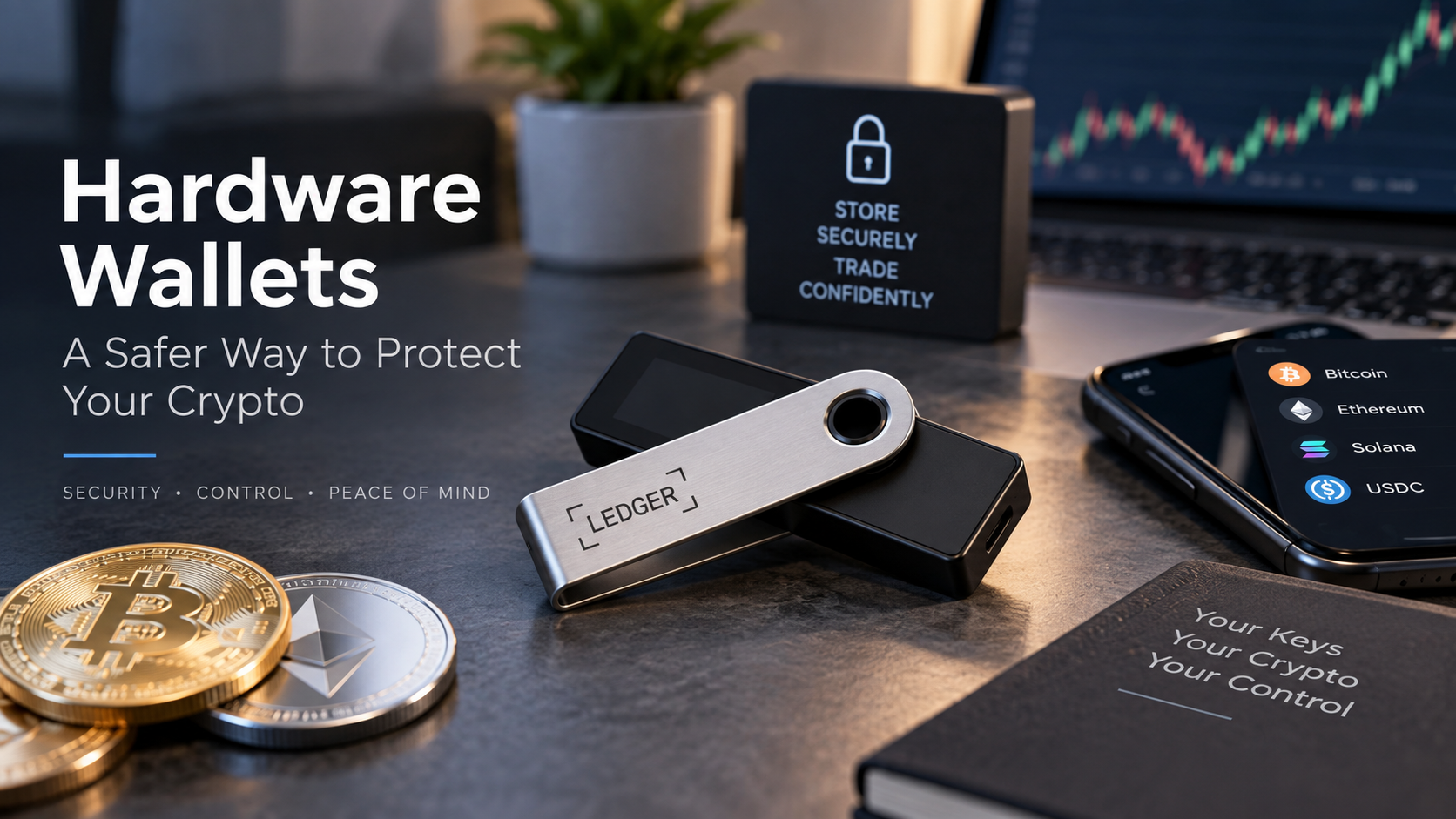
A hardware wallet helps protect cryptocurrency private keys by isolating sensitive signing operations from everyday internet-connected environments. People use them to gain greater control over their private keys and recovery information.
This guide explains how hardware wallets work, their main security benefits and limitations, common features, and the precautions users should understand before choosing one.
What is a Hardware Wallet?
A hardware wallet is a physical device designed to protect cryptocurrency private keys and authorize transactions while keeping sensitive signing operations isolated from general-purpose internet-connected devices. The cryptocurrency itself remains recorded on the blockchain rather than being stored inside the hardware wallet.
Hardware wallets can reduce exposure to risks such as malware on a computer or smartphone, but they are not immune to every threat. Users still need to protect the device, verify transaction details, install trusted firmware, and securely store recovery information.
How Does a Hardware Wallet Work?
A hardware wallet stores or protects private keys within a dedicated device and uses them to authorize cryptocurrency transactions. When you start a transaction on a connected computer or smartphone, that device sends the transaction details to the hardware wallet for approval and signing.
During this process, the device keeps the private key protected. The hardware wallet then returns the signed transaction to the connected device, which broadcasts it to the blockchain network without exposing the private key.
Common Security Features
- Offline or isolated private key protection
- PIN or device-based access controls
- Support for multiple cryptocurrencies, depending on the device and software
- Backup and recovery using a recovery phrase or other supported recovery method
Key Security Benefits
- Reduced Online Exposure: Hardware wallets can reduce exposure of private keys to malware and other threats on internet-connected computers or smartphones by keeping signing operations within a dedicated device.
- User Control: With a non-custodial hardware wallet, users can directly manage their private keys and recovery information rather than relying on a third party to hold them.
- Backup and Recovery: If a device is lost or damaged, access may be restored using a valid recovery phrase or another recovery method supported by the wallet.
What to Consider When Choosing a Hardware Wallet
- Security Design: Review how the device protects private keys, verifies transactions, and handles firmware updates.
- Recovery Options: Understand how wallet recovery works and how recovery information should be backed up.
- Cryptocurrency Support: Confirm that the device and its compatible software support the cryptocurrencies you plan to use.
- Device Compatibility: Check compatibility with your computer, smartphone, operating system, and any third-party wallet applications you use.
- Official Sources: Purchase hardware wallets from the manufacturer or an authorized seller and follow the manufacturer’s setup instructions.
Related Guides
- Crypto Wallet Types Explained
- How to Protect Your Private Keys
- Choosing Between Hot and Cold Wallets: Which is Right for You?
Official Resources
- Bitcoin.org – Securing Your Wallet
- Ethereum.org – Security and Scam Prevention
- Bitcoin.org – Choose Your Wallet
FAQs
Can hardware wallets be hacked?
Hardware wallets can reduce exposure to many online threats, but they are not completely immune to compromise. Risks can include malicious or tampered devices, compromised recovery information, unsafe firmware or software, phishing, and mistakes when verifying transactions.
Are hardware wallets worth the investment?
Whether a hardware wallet is worthwhile depends on how you use cryptocurrency, the amount you manage, how frequently you need access, and your preferred approach to security. A hardware wallet may be useful for users who want to keep private keys isolated from everyday internet-connected devices.
What happens if I lose my hardware wallet?
If you lose or damage your hardware wallet, you may regain access on a compatible device with a valid recovery phrase or another supported recovery method. If you also lose all valid recovery information, you may be unable to recover access to your cryptocurrency.
Final Thoughts
Hardware wallets can help reduce the exposure of private keys to threats on everyday internet-connected devices, but they are only one part of cryptocurrency security. Safe setup, careful transaction verification, trusted software and firmware, and secure recovery information remain important.
Before choosing a hardware wallet, consider how you plan to use cryptocurrency, which assets and devices you need to support, and how you will protect your recovery information. Understanding these responsibilities can help you use a hardware wallet more securely.

 Bitcoin
  Ethereum
  Tether
  BNB
BNB  XRP
XRP  USDC
USDC  Solana
  TRON
TRON  Figure Heloc
  Zcash
Zcash
1 comment
[…] How Hardware Wallets Work […]
Comments are closed.