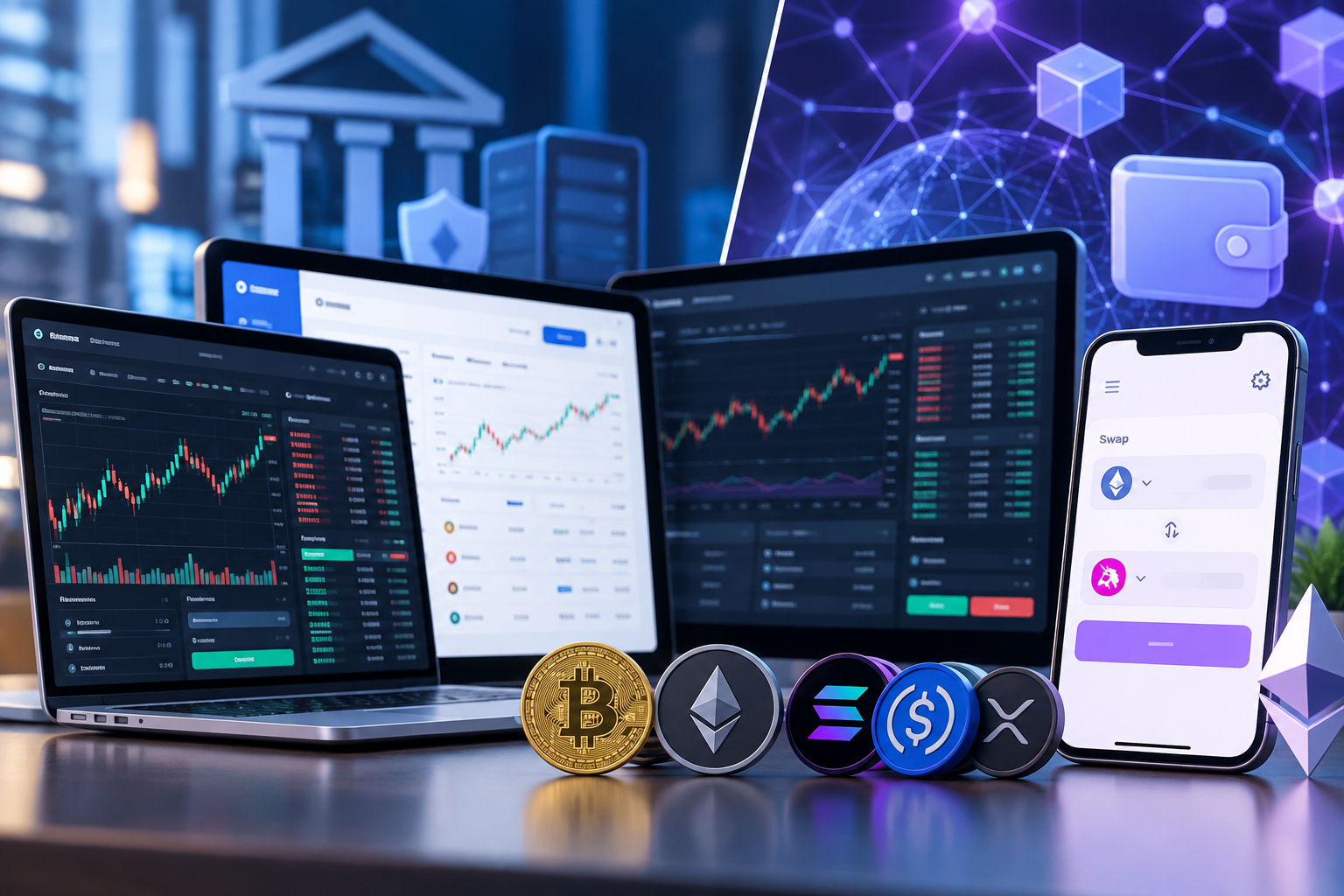
Crypto exchanges differ significantly in how they handle trading, custody, security, supported assets, fees, and access to blockchain networks. Some platforms focus on simple buying and selling, while others provide advanced trading tools, derivatives, staking services, or decentralized token swaps.
Choosing between crypto exchanges therefore requires more than comparing a single trading fee or looking for the largest platform. Liquidity, account security, withdrawal options, regional availability, and the type of trading you plan to do can all affect which platform is suitable for a particular use case.
This guide compares several widely used centralized and decentralized crypto exchanges, focusing on their key characteristics and differences rather than ranking them from best to worst.
Binance
Binance is a centralized cryptocurrency exchange that provides spot trading along with a broad range of additional crypto-related services. Its available products and features can vary depending on the user’s country or region.
- Trading Options: Spot trading and other trading products are available depending on regional eligibility.
- Asset Selection: The platform supports a broad range of cryptocurrencies and trading pairs, although availability varies by jurisdiction.
- Fees: Trading fees can depend on factors such as the market, account tier, trading volume, and applicable discounts.
- Security Features: Users can access account-security tools such as two-factor authentication and withdrawal-related controls.
- Additional Services: Depending on location, Binance may provide staking, earning products, wallet services, and other blockchain-related features.
- Regional Availability: Some products or services may be restricted or unavailable in particular jurisdictions.
Binance can offer a wide range of trading features, but users should verify which services, fees, and regulatory conditions apply in their location before using the platform.
Coinbase
Coinbase is a centralized cryptocurrency exchange that provides cryptocurrency buying, selling, trading, and custody-related services. Its interface and available products range from simplified purchase tools to more advanced trading features.
- Trading Options: Users can access cryptocurrency trading through standard purchase tools and more advanced trading interfaces.
- Asset Selection: Coinbase supports a range of cryptocurrencies, although individual assets and trading pairs can vary by region.
- Fees and Spreads: Costs can differ depending on the transaction type, order method, market conditions, and other factors.
- Security Features: Account protection options include security controls designed to reduce unauthorized access and withdrawals.
- Custody Services: Coinbase provides custody-related services for individual and institutional users.
- Regional Availability: Available products, payment methods, and services can differ depending on the user’s jurisdiction.
When evaluating Coinbase, compare the specific transaction method, total cost, supported assets, withdrawal options, and services available in your location.
Kraken
Kraken is a centralized cryptocurrency exchange that provides spot trading and a range of additional trading services. The platform offers both standard account features and tools designed for users who want more advanced order and trading options.
- Trading Options: Spot trading and additional trading products are available, although specific services can vary by region.
- Asset Selection: Kraken supports a range of cryptocurrencies and trading pairs, with availability depending on jurisdiction.
- Fees: Trading costs can vary according to factors such as order type, trading volume, market, and service used.
- Security Features: The platform provides account-security and withdrawal-related controls for protecting user accounts.
- Advanced Trading Tools: Kraken offers trading interfaces and order types intended for users who need more detailed market and execution controls.
- Regional Availability: Certain products and features may be restricted or unavailable in particular countries or regions.
When comparing Kraken with other exchanges, consider its available trading tools, total transaction costs, supported assets, withdrawal options, and the services available in your location.
Bybit
Bybit is a centralized cryptocurrency exchange that provides spot trading as well as a range of derivatives and other crypto-related services. Its available products can vary depending on the user’s location and regulatory requirements.
- Trading Options: The platform provides spot trading and various derivatives products where available.
- Asset Selection: Bybit supports a range of cryptocurrencies and trading pairs, although availability can differ by market and region.
- Fees: Trading costs can vary according to the product, order type, trading volume, account tier, and other conditions.
- Trading Tools: The platform offers charting, order-management, and other features intended for active cryptocurrency trading.
- Security Features: Users have access to account-security and withdrawal-related controls.
- Regional Availability: Some Bybit products or the platform itself may not be available in certain jurisdictions.
When evaluating Bybit, consider the specific products you intend to use, their associated risks and costs, and whether those services are available in your jurisdiction.
Uniswap and Centralized Crypto Exchanges
Uniswap is a decentralized exchange protocol that allows users to swap supported crypto assets directly through compatible wallets. Unlike centralized exchanges, users generally retain control of their assets while interacting with the protocol.
- Trading Model: Token swaps are executed through liquidity pools rather than a traditional centralized order book.
- Wallet Connection: Users interact with Uniswap through compatible self-custody wallets instead of depositing assets into a centralized exchange account.
- Costs: The total cost of a swap can include liquidity-provider or protocol-related fees, blockchain network fees, price impact, and slippage.
- Asset Availability: Available tokens depend on the blockchain networks and liquidity pools supported by the protocol.
- Liquidity: Trading conditions can vary significantly between pools, particularly for assets with limited liquidity.
- Security Considerations: Users must verify token contracts, wallet transactions, and the applications they connect to because decentralized trading introduces different risks from centralized exchanges.
Uniswap differs fundamentally from centralized exchanges such as Binance, Coinbase, Kraken, and Bybit. When comparing them, consider custody, liquidity, network costs, asset availability, and how transactions are executed rather than comparing trading fees alone.
Related Guides
- How to Choose a Crypto Exchange: Key Factors to Consider
- Crypto Exchange Fees: Trading, Spreads and Withdrawals
- Cryptocurrency Security and Digital Asset Protection
- How to Use Uniswap: Swaps, Liquidity, Fees and Risks
Official Resources
FAQs
What is the difference between a centralized and decentralized crypto exchange?
A centralized exchange generally manages user accounts and holds deposited assets in custody, while a decentralized exchange allows users to trade through compatible self-custody wallets and blockchain-based protocols.
What should I compare when choosing a crypto exchange?
Consider security controls, liquidity, supported cryptocurrencies, trading features, total transaction costs, withdrawal options, custody arrangements, and whether the platform is available in your jurisdiction.
Are crypto exchange fees the same on every platform?
No. Fee structures vary between exchanges and can also depend on trading volume, account tier, transaction type, payment method, blockchain network, and other factors.
Is a decentralized exchange safer than a centralized exchange?
They involve different types of risk. Centralized exchanges introduce custody and account-related risks, while decentralized exchanges require users to manage their own wallets and verify tokens, smart-contract interactions, and transactions.
Can crypto exchange features change over time?
Yes. Supported assets, fees, trading products, payment methods, and regional availability can change. Check current information from the platform’s official website before using a service.
Final Thoughts
Crypto exchanges differ in their trading models, custody arrangements, supported assets, security features, fees, and regional availability. Centralized exchanges generally provide account-based trading and custody services, while decentralized exchanges allow users to interact directly through self-custody wallets.
Rather than choosing a platform based on popularity or a single feature, compare the services you actually need, the total cost of transactions, available security controls, liquidity, withdrawal options, and access in your jurisdiction.
Features and conditions at crypto exchanges can change over time, so review current information from official sources before depositing funds or making transactions.

 Bitcoin
  Ethereum
  Tether
  BNB
BNB  XRP
XRP  USDC
USDC  Solana
  TRON
TRON  Figure Heloc
  Zcash
Zcash