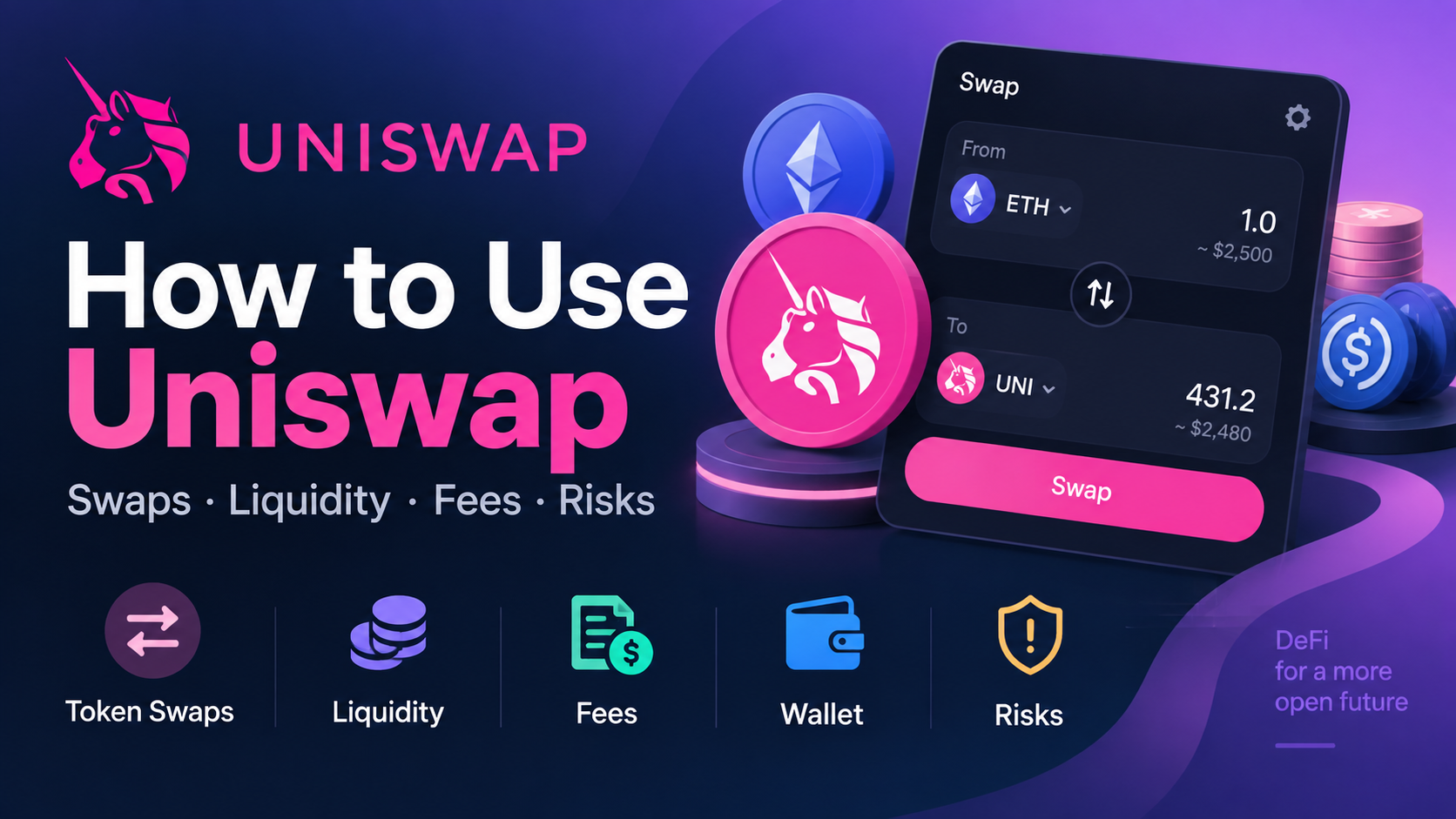
Uniswap is a decentralized exchange protocol that allows users to swap crypto assets directly from their wallets without relying on a traditional centralized exchange. It uses liquidity pools and smart contracts to facilitate trades across supported blockchain networks.
This guide explains token swaps and liquidity provision on Uniswap, how fees and slippage work, and what risks to consider before interacting with the protocol.
What is Uniswap?
Uniswap is a decentralized exchange protocol that allows users to trade crypto assets directly from self-custody wallets. Instead of relying on a traditional order book, Uniswap uses liquidity pools and smart contracts to execute swaps.
Liquidity providers supply assets to these pools, while traders use the available liquidity to exchange tokens. Because users interact with Uniswap through their own wallets, they generally retain control of their assets until they approve and execute a transaction.
Uniswap has evolved through several protocol versions, with Uniswap v4 introducing a more flexible architecture that allows developers to customize pool behavior through features known as hooks.
Key Features of Uniswap
Uniswap v4 and Hooks
Uniswap v4 introduces hooks, which are smart contracts that developers can use to customize how liquidity pools behave. Hooks can support features such as dynamic fees, customized liquidity management, and other functions that run at specific points during a swap or liquidity operation.
Multi-Network Support
Uniswap is available across multiple blockchain networks and Layer 2 ecosystems. Using supported networks can provide different combinations of available tokens, liquidity, transaction costs, and settlement speeds.
Self-Custody Trading
Users connect a compatible crypto wallet and interact with Uniswap without depositing funds into a traditional exchange account. However, users remain responsible for wallet security, transaction approvals, and verifying the tokens and networks they interact with.
Liquidity Pools
The protocol relies on liquidity pools rather than a traditional centralized order book. Users can provide liquidity to supported pools and may earn fees generated by trading activity, but liquidity provision also involves risks such as price movements, impermanent loss, and smart contract risk.
How to Use Uniswap
Step 1: Connect a Compatible Wallet
Open the official Uniswap web app and connect a compatible self-custody wallet. Before approving any connection or transaction, verify that you are using the official Uniswap website and the intended blockchain network.
Step 2: Choose the Network
Select the blockchain network you want to use. Available tokens, liquidity, transaction fees, and processing times can vary between networks, so make sure your wallet contains the appropriate asset for network fees.
Step 3: Select the Tokens
Choose the token you want to swap and the token you want to receive. Enter the amount, then review the estimated output and other transaction details before proceeding.
Step 4: Review Fees and Slippage
Check the displayed network cost, swap details, and price impact before confirming the transaction. Slippage refers to the difference between the expected price and the actual execution price, which can become more significant when liquidity is limited or markets are volatile.
Step 5: Approve and Confirm the Swap
Some tokens require a separate approval before they can be swapped. Review wallet prompts carefully, approve only the permissions you understand, and then confirm the swap. After the transaction is processed, verify the result in your wallet or through a blockchain explorer.
Step 6: Add Liquidity if Desired
Users who want to provide liquidity can select a supported pool and deposit the required assets according to the pool configuration. Liquidity providers may receive trading fees, but returns are not guaranteed and positions can be affected by price movements, impermanent loss, and smart contract risks.
Uniswap Fees and Costs
Using Uniswap can involve several types of costs. The total amount depends on the liquidity pool, blockchain network, market conditions, and transaction being performed.
Important costs to review include:
- Liquidity Provider Fees: Swaps may include fees that go to liquidity providers according to the pool’s fee structure.
- Network Fees: Blockchain transactions require network fees, which can vary significantly depending on the network and current activity.
- Price Impact: Larger trades or pools with limited liquidity can move the execution price away from the displayed market price.
- Slippage: Market movements or limited liquidity can cause the final execution price to differ from the expected price.
- Token Approval Costs: Some tokens require a separate blockchain transaction before the first swap, which can create an additional network fee.
Before confirming a swap, review the estimated output, fees, price impact, and other transaction details shown in the Uniswap interface.
Uniswap Risks to Consider
Before using Uniswap, it is important to understand the risks associated with decentralized trading and liquidity provision.
- Smart Contract Risk: Vulnerabilities in smart contracts, tokens, or connected applications can result in financial losses.
- Token Risk: Token names and symbols can be copied, so verify contract addresses before swapping unfamiliar assets.
- Slippage and Price Impact: Trades can execute at less favorable prices when liquidity is limited or markets move quickly.
- Impermanent Loss: Liquidity providers may experience losses relative to simply holding the deposited assets when token prices change.
- Wallet Security: Users are responsible for protecting recovery phrases, private keys, wallet permissions, and transaction approvals.
Tips for Using Uniswap Safely
A few basic precautions can reduce common risks when using decentralized exchanges.
- Use the Official Uniswap Interface: Check the website address before connecting your wallet or approving a transaction.
- Verify Token Contract Addresses: Confirm unfamiliar tokens through reliable sources rather than relying only on names or symbols.
- Review Transaction Details: Check the token pair, network, estimated output, fees, slippage, and price impact before confirming a swap.
- Check Wallet Approvals: Avoid granting unnecessary token permissions and review existing approvals periodically.
- Start Carefully: When using an unfamiliar token, network, or liquidity pool, consider testing the process with a smaller transaction first.
- Protect Your Recovery Phrase: Never enter your wallet recovery phrase into a website or share it with another person.
Related Guides
- Smart Contracts Explained: How They Work and Why They Matter
- How to Choose a Crypto Exchange: Key Factors to Consider
- Tokenomics Explained: How Crypto Tokens Gain and Sustain Value
Official Resources
- Uniswap – Official App
- Uniswap Docs – Protocol Documentation
- Uniswap Labs – How to Swap Tokens With the Uniswap Web App
FAQs
What is Uniswap used for?
Uniswap is a decentralized exchange protocol that allows users to swap supported crypto assets directly from self-custody wallets. Users can also provide liquidity to supported pools and interact with other features available through the protocol.
Do I need an account to use Uniswap?
Uniswap does not require a traditional exchange account for basic protocol interactions. Instead, users connect a compatible crypto wallet and approve transactions through that wallet.
What fees do I pay when using Uniswap?
Costs can include liquidity provider fees and blockchain network fees. Users should also consider slippage and price impact, which can affect the final amount received from a swap.
Is Uniswap safe to use?
Uniswap is based on smart contracts and self-custody, but using decentralized finance still involves risks. Users should verify token contract addresses, review transaction details and wallet approvals, protect their recovery phrases, and understand smart contract and liquidity risks.
Final Thoughts
Uniswap provides a decentralized way to swap crypto assets and provide liquidity directly through a self-custody wallet. Its multi-network support and evolving protocol design give users access to a range of decentralized trading and liquidity features.
However, using Uniswap also requires users to take responsibility for wallet security, token verification, transaction approvals, fees, slippage, and other DeFi risks. Liquidity providers should also understand the potential effects of price movements and impermanent loss.
Before making a swap or providing liquidity, review the transaction details carefully and verify that you are using the official Uniswap interface and the intended token contracts. Understanding how the protocol works can help you use its features more safely and effectively.

 Bitcoin
  Ethereum
  Tether
  BNB
BNB  XRP
XRP  USDC
USDC  Solana
  TRON
TRON  Figure Heloc
  Zcash
Zcash