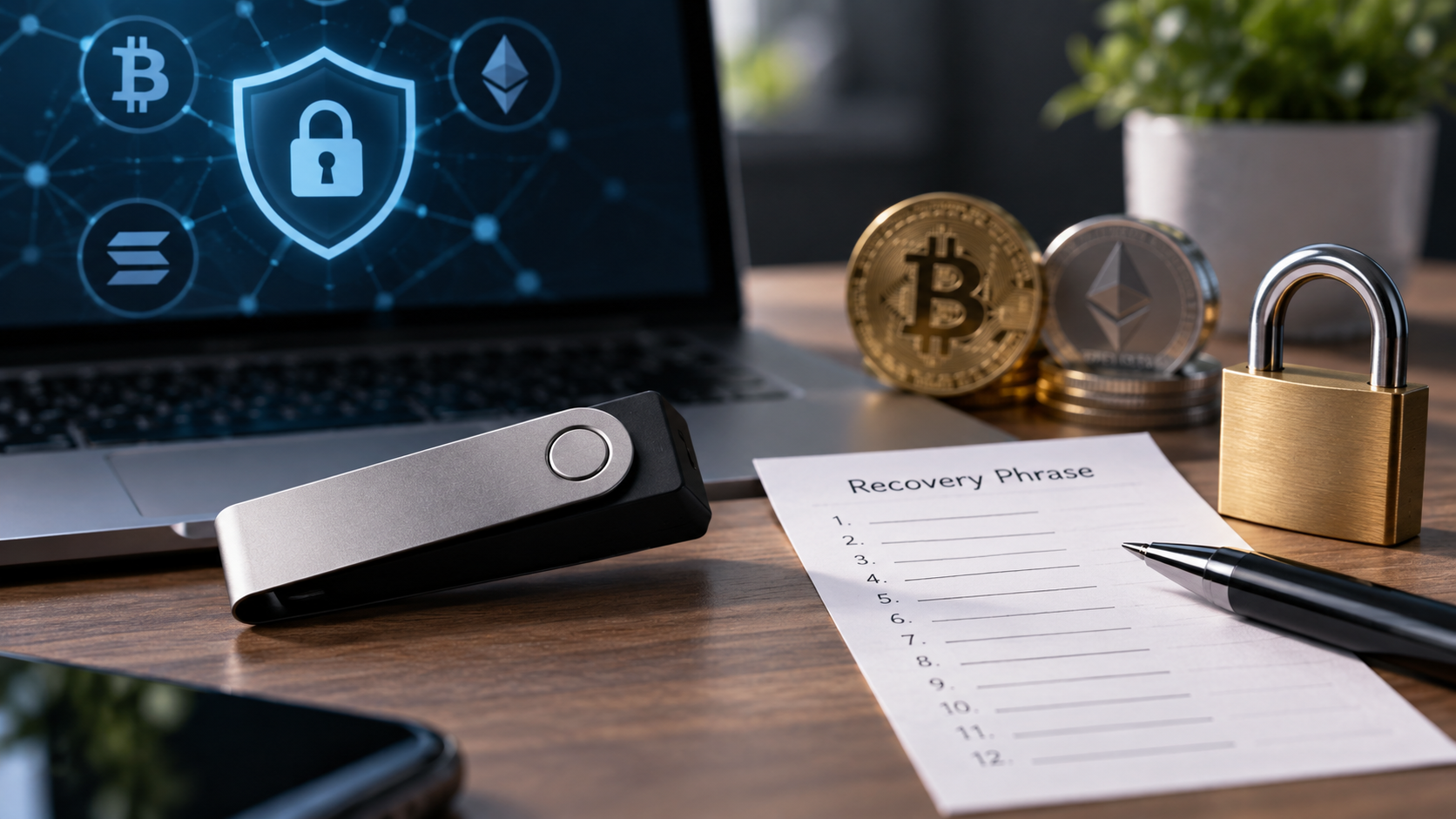
Private key security is essential for anyone who uses a self-custody cryptocurrency wallet. A private key authorizes transactions and helps control access to cryptocurrency associated with a blockchain address, so exposing or losing it can put those assets at risk.
This guide explains practical ways to protect private keys and recovery phrases, including offline storage, secure backups, software updates, and phishing prevention.
What Are Private Keys?
Private keys are cryptographic values used to authorize transactions and control access to cryptocurrency associated with a blockchain address. Anyone who obtains your private key may be able to authorize transactions, which is why it must be kept confidential and securely protected.
Why Private Key Security Matters
Unlike many traditional financial transactions, cryptocurrency transfers can be difficult or impossible to reverse once confirmed. If a private key is compromised, an attacker may be able to authorize unauthorized transactions. Protecting private keys is therefore a fundamental part of cryptocurrency security.
Private Key Security Best Practices
Use Hardware Wallets
Hardware wallets are designed to keep private keys isolated from internet-connected devices, reducing exposure to many online threats. Purchase a hardware wallet from the manufacturer or an authorized seller, keep its firmware updated, and protect the recovery phrase separately.
Enable Multi-Factor Authentication (MFA)
Enable multi-factor authentication (MFA) on exchanges and other cryptocurrency accounts that support it. When available, prefer an authenticator app, passkey, or hardware security key over SMS-based verification.
Create Secure Backups
Keep secure offline backups of important recovery information, such as your wallet’s recovery phrase. Store backups in protected locations away from internet-connected devices, and consider maintaining more than one secure copy to reduce the risk of loss or physical damage.
Use Cold Storage
Cold storage keeps private keys offline and separated from internet-connected devices, reducing exposure to many online threats. However, offline storage still requires careful protection against loss, theft, physical damage, and improper backup practices.
Avoid Cloud Storage
Avoid storing private keys or recovery phrases in cloud storage, email, screenshots, or other internet-connected services. If an online account or device is compromised, sensitive wallet information stored there could also be exposed.
Keep Software Up to Date
Keep your wallet software, operating system, and security tools up to date. Updates often include security patches and bug fixes that address known vulnerabilities. Download wallet software and updates only from official sources.
Be Aware of Phishing Attacks
Verify website addresses before entering sensitive information, and avoid suspicious links, emails, messages, or social media accounts. Legitimate wallet providers and support staff should never need your private key or recovery phrase.
Internal and External Resources
For further reading, check out:
And don’t miss our internal guide: Top 10 Cryptocurrency Security Tips
FAQs
Q: Can I recover my crypto if I lose my private key?
A: If you lose access to a private key, recovery may be possible if you have the wallet’s recovery phrase or another valid backup method. Without the private key, recovery phrase, or another supported recovery mechanism, access to the associated cryptocurrency may be permanently lost.
Q: Is a paper wallet still safe?
A: Paper wallets can keep private key information offline, but they also carry risks such as physical damage, loss, theft, insecure generation, and mistakes when importing or spending funds. For most users, a reputable hardware wallet with a securely protected recovery phrase is generally easier to manage safely.
Q: Are mobile wallets safe?
A: Mobile wallets can be suitable for everyday cryptocurrency use when the device and wallet are properly secured. Use a strong device lock, keep the operating system and wallet app updated, download apps only from official sources, and protect your recovery phrase separately. For larger amounts or long-term storage, offline storage may reduce exposure to online threats.
Q: Should I share my private keys with anyone?
A: Never share your private key or recovery phrase with another person, website, support agent, or unsolicited contact. Anyone who obtains this information may be able to control the associated cryptocurrency.
Final Thoughts on Private Key Security
Protecting private keys requires a combination of secure storage, reliable backups, careful device management, and awareness of phishing threats. No single security measure can eliminate every risk, so using several layers of protection is important.
Keep private keys and recovery phrases confidential, store backups securely offline, and regularly review the security of the devices and services you use. Good security habits can significantly reduce the risk of losing access to your cryptocurrency or exposing it to unauthorized users.

 Bitcoin
  Ethereum
  Tether
  BNB
BNB  XRP
XRP  USDC
USDC  Solana
  TRON
TRON  Zcash
Zcash  Figure Heloc