


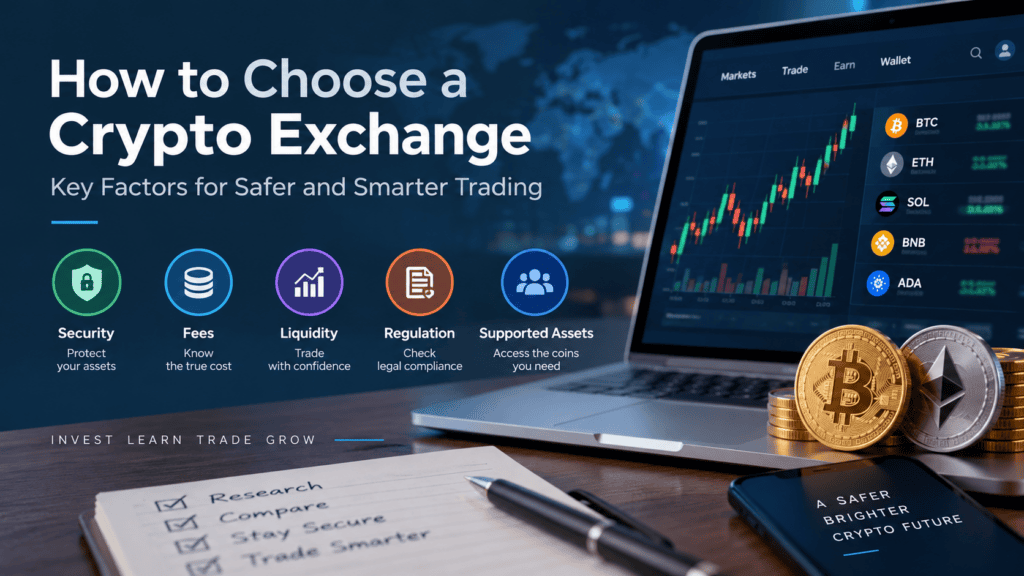
To choose a crypto exchange, you need to consider more than trading fees or the number of available coins. Regulation, security, liquidity, supported assets, withdrawal options, and ease of use can all affect your trading experience and the safety of your funds.
The right platform also depends on your location and individual needs. An exchange available in one country may face different regulatory requirements or offer different services in another.
This guide explains how to choose a crypto exchange by evaluating the key factors that matter most, from regulatory compliance and security to fees, liquidity, usability, and transparency.
Regulatory Compliance
Regulation should be one of the first factors you check when choosing a crypto exchange. Requirements vary by country, so confirm whether the platform is legally permitted to serve customers in your jurisdiction.
Before opening an account, check:
- Local Authorization: Confirm whether the exchange is registered, licensed, or otherwise authorized where required.
- Customer Fund Protection: Review how the platform separates or safeguards customer assets.
- Identity Verification: Understand the exchange’s KYC and account verification requirements.
- Terms and Restrictions: Check whether specific trading, staking, lending, or other services are restricted in your location.
Regulatory status can change over time. Therefore, verify current information with the relevant financial regulator and the exchange’s official documentation before depositing funds.
Security Features
Security is a critical factor when choosing a crypto exchange. A strong platform should use multiple safeguards to protect accounts, assets, and withdrawals.
Look for features such as:
- Two-Factor Authentication (2FA): Adds an extra layer of protection when signing in or making sensitive account changes.
- Cold Storage: Keeps a significant portion of customer crypto assets offline and away from online threats.
- Withdrawal Protection: Address whitelisting, withdrawal confirmations, and security delays can help prevent unauthorized transfers.
- Security Audits: Independent audits and publicly available security information can provide additional transparency.
- Proof of Reserves: Where available, reserve disclosures can provide information about assets held by an exchange, although they do not replace a full financial audit.
Also review the exchange’s security history. If it has experienced a breach, examine how the incident was handled, whether affected customers were compensated, and what security measures changed afterward.
Trading Fees and Costs
Crypto exchange costs can extend beyond the advertised trading fee. The total cost of using a platform depends on how you trade, deposit funds, buy crypto, and withdraw assets.
Compare the following costs:
- Trading Fees: Maker and taker fees may vary according to trading volume, account tier, or product type.
- Spread: Some platforms include a difference between the quoted market price and the price at which an order is executed.
- Deposit Fees: Bank transfers, cards, and other payment methods may have different costs.
- Withdrawal Fees: Crypto and fiat withdrawals may involve platform, banking, or blockchain network fees.
- Currency Conversion Costs: Additional charges or exchange-rate spreads may apply when converting between currencies.
Compare the total cost of a typical transaction, not just the headline trading fee. Always check the exchange’s current fee schedule because pricing can change over time.
Available Cryptocurrencies and Pairs
The number of supported cryptocurrencies matters, but a larger selection does not automatically make an exchange better. Focus on whether the platform supports the assets and trading pairs you actually need.
Consider the following:
- Major Cryptocurrencies: Check whether the exchange supports widely traded assets such as Bitcoin and Ethereum.
- Trading Pairs: Confirm that the crypto-to-crypto or fiat-to-crypto pairs you need are available.
- Fiat Currency Support: Check whether you can deposit, trade, and withdraw using your preferred currency.
- Asset Availability: Some cryptocurrencies or services may be unavailable in certain countries because of regulatory or platform restrictions.
- Withdrawal Support: Confirm that purchased crypto can be withdrawn to an external wallet when that feature is important to you.
Before depositing funds, verify the exchange’s current asset list and regional restrictions because supported cryptocurrencies and trading pairs can change.
Liquidity and Trading Volume
Liquidity affects how easily you can buy or sell cryptocurrency without causing a significant change in price. Higher liquidity can generally support faster execution and reduce slippage, especially for larger orders.
When evaluating liquidity, consider:
- Trading Volume: Review recent trading activity for the specific assets and pairs you plan to use.
- Order Book Depth: A deeper order book may help larger trades execute with less price impact.
- Bid-Ask Spread: Narrower spreads can indicate more active trading and lower transaction friction.
- Liquidity by Trading Pair: An exchange may have strong overall volume while individual trading pairs remain relatively illiquid.
Do not rely on reported trading volume alone. Compare order-book activity, spreads, and other market data when assessing liquidity.
Platform Usability and Interface
A crypto exchange should be easy to use without sacrificing the tools you need. A clear interface can help reduce mistakes when placing orders, transferring assets, or managing account security.
Consider the following:
- Trading Interface: Check whether order types, charts, balances, and transaction history are easy to understand.
- Mobile and Desktop Access: Confirm that the platform works well on the devices you plan to use.
- Deposit and Withdrawal Process: Review how easily you can move fiat currency and crypto assets into and out of the exchange.
- Customer Support: Check available support channels, response options, and help documentation.
- Advanced Tools: Experienced traders may also need APIs, advanced order types, or professional trading interfaces.
Before depositing a large amount, consider testing the platform with a small transaction to understand its interface, fees, and withdrawal process.
Additional Features
Additional features can be useful, but they should come after regulation, security, fees, liquidity, and basic usability when comparing crypto exchanges.
Depending on your needs, consider:
- Staking Services: Some exchanges allow eligible users to earn staking rewards on supported assets.
- Recurring Purchases: Automated purchases can be useful for users who follow a regular buying schedule.
- Advanced Trading Tools: Limit orders, stop orders, APIs, and other tools may be important for active traders.
- Tax and Transaction Records: Downloadable account statements and transaction histories can simplify record keeping.
- Wallet and Transfer Features: Check whether the platform supports external wallet withdrawals and the blockchain networks you intend to use.
Availability, fees, and eligibility for these features can vary by country and may change over time. Therefore, verify current details before relying on a particular service.
Community Reputation and Transparency
Reputation and transparency can provide useful clues about how a crypto exchange operates and responds to problems. However, online reviews alone should not determine your decision.
Check the following:
- Operating History: Review how long the exchange has operated and whether it has experienced major security or withdrawal problems.
- Company Information: Look for clear information about the company, its legal entities, and where it operates.
- Security Disclosures: Check whether the exchange publishes security information, incident updates, or other relevant reports.
- User Complaints: Look for recurring issues involving withdrawals, account access, customer support, or unexpected fees.
- Response to Incidents: Consider how clearly and promptly the platform has responded to previous security or operational problems.
Use reputation as one part of a broader assessment. Regulation, security practices, fees, liquidity, and withdrawal policies should also influence your choice.
How to Choose a Crypto Exchange: Decision Checklist
| Factor | Why It Matters |
|---|---|
| Regulation | Determines whether the exchange can legally serve users in your jurisdiction |
| Security | Helps protect accounts, assets, and withdrawals |
| Fees and Costs | Affects the total cost of buying, trading, and withdrawing crypto |
| Supported Assets | Determines access to the cryptocurrencies and trading pairs you need |
| Liquidity | Can improve trade execution and reduce slippage |
| Usability | Affects how easily you can trade, transfer assets, and manage your account |
| Additional Features | Provides optional tools such as staking, recurring purchases, and advanced orders |
| Transparency | Helps you evaluate the exchange’s operations, history, and response to problems |
Related Guides
- Bitcoin vs Ethereum: Key Differences, Uses and Risks
- Smart Contracts Explained: How They Work and Why They Matter
- Top 5 Crypto Exchanges in 2025: Features, Fees, and Safety Compared
Official Resources
FAQs
How do I choose a crypto exchange safely?
To choose a crypto exchange safely, start by checking whether it can legally operate in your jurisdiction. Then review its security practices, withdrawal protections, operating history, and response to previous security incidents. No exchange is completely risk-free, so consider several factors rather than relying on a single security feature.
What fees should I check before choosing a crypto exchange?
Compare trading fees, spreads, deposit and withdrawal fees, currency conversion costs, and blockchain network fees where applicable. The lowest advertised trading fee does not always mean the lowest overall cost.
Is it safe to keep cryptocurrency on an exchange?
Keeping crypto on an exchange can be convenient for trading, but it means relying on the platform to safeguard your assets and account access. A self-custody wallet gives you direct control of your private keys, but it also makes you responsible for securing and recovering them.
Does a crypto exchange with more cryptocurrencies make it better?
Not necessarily. A large selection can be useful, but regulation, security, liquidity, fees, withdrawal support, and availability of the assets you actually need are usually more important than the total number of listed cryptocurrencies.
Final Thoughts
Choosing a crypto exchange requires balancing regulation, security, fees, liquidity, supported assets, and usability. No single platform is ideal for every user, so the right choice depends on your location, trading needs, and preferred features.
Before opening an account, compare several exchanges and verify their current fees, withdrawal policies, security measures, and regulatory status. Starting with a small deposit or transaction can also help you understand how the platform works before committing larger amounts.
Finally, consider whether you want to keep crypto assets on an exchange or transfer them to a wallet you control. Each approach involves different responsibilities and risks, so choose the custody method that fits your needs and level of experience.