


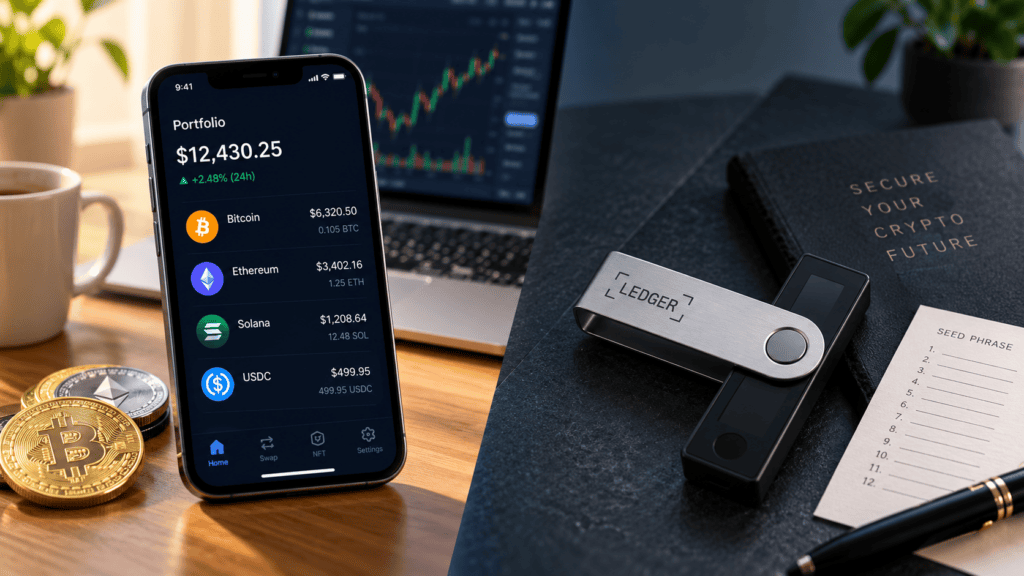
Understanding crypto wallet types is essential for anyone managing cryptocurrency or interacting with blockchain networks. Rather than storing cryptocurrency itself, a wallet helps users manage the private keys or credentials needed to access and authorize transactions involving their digital assets.
This guide explains the main types of crypto wallets, including hot and cold wallets as well as custodial and non-custodial options, and highlights the security and convenience considerations of each.
What Is a Crypto Wallet?
A crypto wallet is a tool that helps users manage the private keys or other credentials needed to interact with blockchain networks. The cryptocurrency itself remains recorded on the blockchain rather than being stored inside the wallet. Depending on the wallet type, users may control their own private keys or rely on a third-party custodian to manage them.
Main Crypto Wallet Types
Crypto wallet types can be broadly divided into hot wallets and cold wallets based on how they connect to online environments.
Hot Wallets
Hot wallets operate on internet-connected devices or services, making them convenient for frequent transactions and everyday use. However, because they are used in connected environments, their security also depends on factors such as device protection, software security, account credentials, and safe user practices.
Types of Hot Wallets:
- Desktop Wallets: Software wallets installed on a desktop or laptop computer. Security depends partly on the security of the device and operating system.
- Mobile Wallets: Wallet apps designed for smartphones, offering convenient access for payments and everyday cryptocurrency use.
- Browser-Based Wallets: Wallets accessed through a browser interface or browser extension, often used to interact with blockchain applications and services.
Hot wallets can be convenient for everyday transactions and frequent access, but users should protect their devices, accounts, and recovery information with appropriate security measures.
Cold Wallets
Cold wallets are offline wallets that offer enhanced security by isolating private keys from online threats.
Types of Cold Wallets:
- Hardware Wallets: Physical devices designed to keep private keys isolated from internet-connected environments while transactions are authorized.
- Paper-Based Backups: Private keys or recovery information recorded on paper and stored offline, although physical loss, damage, or insecure creation can introduce risks.
- Air-Gapped Devices: Devices intentionally kept disconnected from networks and used to manage or authorize cryptocurrency transactions offline.
Cold wallets can be useful for long-term storage because they reduce the exposure of private keys to internet-connected environments. However, users must still protect their devices and recovery information from loss, theft, and physical damage.
Custodial vs. Non-Custodial Wallets
- Custodial Wallets: A third-party service manages the private keys or account access on the user’s behalf. This can simplify account recovery and everyday use, but it requires users to trust the provider’s security and policies.
- Non-Custodial Wallets: Users manage their own private keys or recovery credentials. This provides greater direct control but also places responsibility for backups and security on the user.
Choosing between custodial and non-custodial wallets depends on factors such as convenience, control, recovery options, security responsibilities, and how comfortable you are managing your own private keys.
Security Considerations
- Use multi-factor authentication when it is supported by wallet-related accounts or services.
- Download wallet software and apps from official sources and verify them carefully.
- Keep wallet software, devices, operating systems, and firmware updated with security patches.
- Protect recovery phrases and private keys offline, and never share them with anyone.
Internal Links
External Links
FAQ
What is the safest type of crypto wallet?
Hardware wallets can reduce exposure to online threats by keeping private keys isolated from internet-connected devices. However, no wallet type is completely risk-free, and security also depends on protecting the recovery phrase, using the device correctly, and following safe security practices.
Can I use more than one type of wallet?
Yes. Some users use different wallets for different purposes, such as a hot wallet for frequent transactions and a cold wallet for longer-term storage. Using multiple wallets can help separate everyday activity from assets that are accessed less frequently.
What happens if I lose my wallet?
If you lose access to a non-custodial wallet, you may be able to restore it using its recovery phrase or another supported backup method. If all valid recovery information is lost, access to the associated cryptocurrency may be impossible to recover. Custodial services may offer separate account recovery options.
Final Thoughts on Choosing a Crypto Wallet
Choosing a crypto wallet depends on how you plan to use cryptocurrency, how often you need access, and how much responsibility you want for managing private keys and recovery information. Hot, cold, custodial, and non-custodial wallets each involve different trade-offs between convenience, control, and security.
Before choosing a wallet, consider your experience level, transaction habits, backup strategy, and security needs. Whichever type you use, protecting private keys and recovery information should remain a priority.