


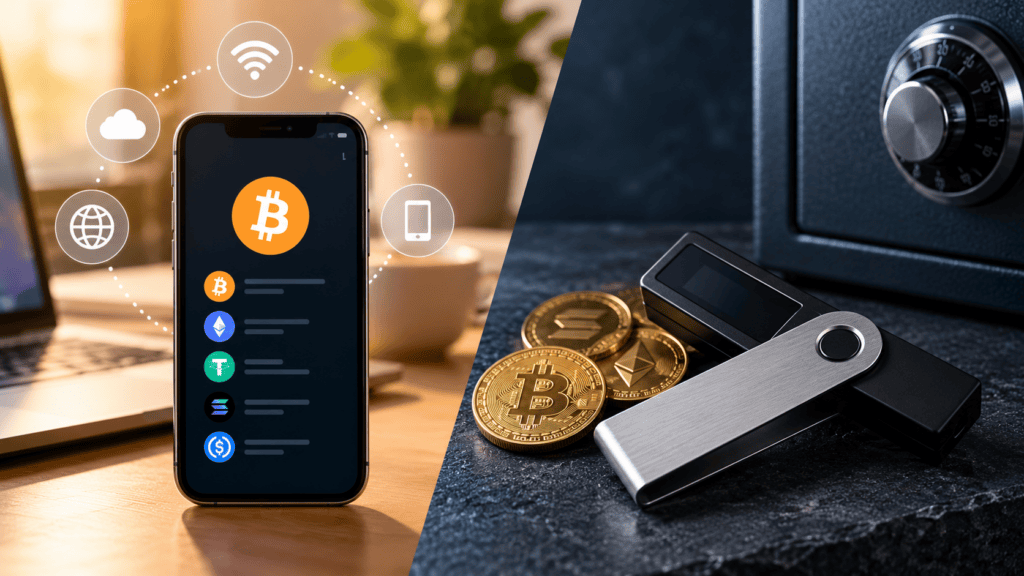
Choosing between a hot wallet and a cold wallet depends on how you use cryptocurrency, how often you need access, and how you prefer to manage security. Hot wallets offer convenient access through internet-connected devices, while cold wallets keep private keys or signing environments offline to reduce exposure to online threats.
This guide compares hot and cold wallets, explains their advantages and limitations, and helps you decide which approach may better fit your cryptocurrency use.
What Are Hot Wallets?
Hot wallets are cryptocurrency wallets that operate on internet-connected devices or services. They can include mobile wallet apps, desktop software, browser-based wallets, and some exchange-related wallet services. Because they remain accessible through connected environments, hot wallets are convenient for frequent transactions and regular cryptocurrency use.
Pros of Hot Wallets
- Accessibility: Hot wallets provide convenient access to cryptocurrency for frequent transactions and everyday use.
- User-friendly: Many hot wallets are designed for straightforward setup and use, making them accessible to less experienced users.
- Integration: Many hot wallets can connect with exchanges, decentralized applications, and other blockchain services.
Cons of Hot Wallets
- Security Risks: Because hot wallets operate in internet-connected environments, they may be exposed to risks such as phishing, malware, compromised devices, or malicious websites.
- Custodial Risk: Some hot wallets are provided by custodial services that manage private keys or account access on the user’s behalf, requiring users to rely on the provider’s security practices.
What Are Cold Wallets?
Cold wallets keep private keys or transaction-signing environments offline rather than storing cryptocurrency itself offline. By reducing the exposure of private keys to internet-connected environments, cold wallets can help protect against many online threats. Hardware wallets and other offline storage methods are common examples.
Pros of Cold Wallets
- High Security: Keeping private keys offline reduces their exposure to many internet-based threats, although safe setup, backups, and physical protection are still important.
- Ownership Control: With a non-custodial cold wallet, users can maintain direct control of their private keys and recovery information.
Cons of Cold Wallets
- Less Convenient: Cold wallets may require additional steps to access or transfer cryptocurrency compared with hot wallets, making them less convenient for frequent transactions.
- Cost: Hardware wallets typically require an upfront purchase, while some other offline storage methods may have little or no direct cost.
How to Choose the Right Wallet
Choosing between hot and cold wallets depends on how frequently you access cryptocurrency, the types of transactions you make, and how you prefer to balance convenience with security.
- Frequent Users: A hot wallet may be convenient for cryptocurrency that you access regularly or use for frequent transactions.
- Long-Term Storage: A cold wallet may be appropriate for cryptocurrency that you do not need to access frequently and want to keep less exposed to online environments.
Some users combine both approaches, keeping cryptocurrency needed for regular transactions in a hot wallet while using a cold wallet for assets that do not require frequent access.
Security Best Practices
Regardless of which wallet type you use, basic security practices can help reduce the risk of losing access or exposing sensitive wallet information.
- Use multi-factor authentication when supported by wallet-related accounts or services.
- Keep wallet software, devices, operating systems, and firmware updated.
- Maintain secure backups of recovery information and store them separately from your wallet device.
- Never share private keys or recovery phrases with anyone.
Related Guides
Official Resources
FAQs
Can I use both hot and cold wallets?
Yes. Some users use a hot wallet for cryptocurrency they access regularly and a cold wallet for assets that do not require frequent access. Using both can provide different levels of convenience and offline protection depending on how the wallets are used.
Are cold wallets completely hack-proof?
No. Cold wallets reduce exposure to many online threats by keeping private keys or signing environments offline, but they are not completely risk-free. Loss, theft, physical damage, compromised recovery phrases, or unsafe setup practices can still put cryptocurrency at risk.
What happens if I lose my cold wallet?
If you lose a cold wallet device, you may still be able to restore access using a valid recovery phrase or another supported backup method. If both the wallet and all valid recovery information are lost, access to the associated cryptocurrency may be impossible to recover.
Which wallet is best for beginners?
The best choice depends on how the wallet will be used and how comfortable the user is with managing private keys and recovery information. Some beginners may find hot wallets easier for frequent access, while hardware wallets can be useful for users who prefer to keep private keys offline. In either case, understanding backups and recovery procedures is essential.
Final Thoughts
Hot and cold wallets serve different purposes rather than competing as a single best option. Hot wallets can provide convenient access for frequent transactions, while cold wallets can reduce the online exposure of private keys for cryptocurrency that does not require regular access.
The right approach depends on how you use cryptocurrency, how often you need access, and how you manage backups and recovery information. Some users may also choose to use both wallet types for different purposes.